For facilities managing GHS chemical drum labels, the stakes are higher. OSHA's Hazard Communication standard ranked as the second most cited OSHA standard in FY 2024, with over 2,500 citations issued. A degraded, illegible label isn't just an inconvenience — it's a compliance exposure.
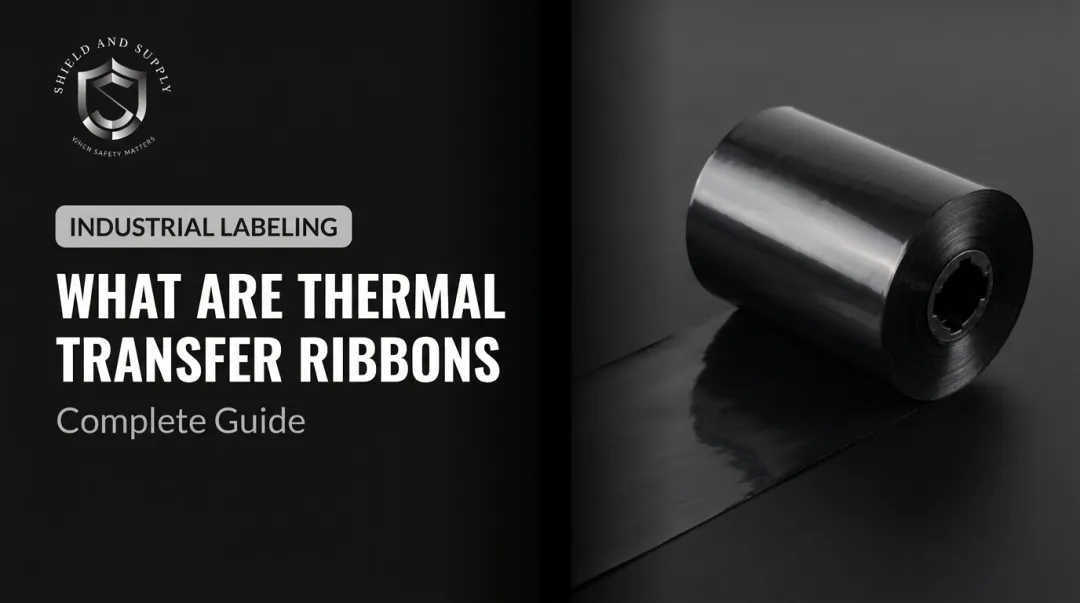
This guide breaks down the core differences between wax and resin thermal transfer ribbons, covers where each performs best, and helps you make the right call for your operation.
Key Takeaways
- Wax ribbons suit high-volume paper label applications in standard indoor environments — shipping labels, bin labels, pallet tags
- Resin ribbons are built for synthetic substrates and harsh conditions: chemical exposure, extreme temperatures, outdoor use, and compliance-critical applications
- Wax-resin ribbons split the difference — better scratch resistance than wax, more flexible substrate range, without full resin cost
- Three factors drive the right choice: substrate material, environment of use, and required label lifespan
- Choosing by upfront cost alone backfires when labels fail early and reprinting eats into savings
Wax vs. Resin Thermal Transfer Ribbons: Quick Comparison
| Factor | Wax | Wax-Resin | Resin |
|---|---|---|---|
| Cost | Lowest | Mid-range | Highest |
| Ink composition | Wax-dominant blend | ~50/50 wax and resin | Resin-dominant formulation |
| Melt point | 65°C / 149°F | 75°C / 167°F | 80°C / 176°F |
| Heat resistance | Up to 60°C / 140°F | Up to 100°C / 212°F | Up to 180°C / 356°F |
| Compatible substrates | Coated/uncoated paper, tags, Tyvek® | Paper, BOPP, coated synthetics | PET, PE, polyamide, synthetic films |
| Durability | Moderate — vulnerable to abrasion, moisture, chemicals | Better scratch/chemical resistance than wax | Maximum — resists abrasion, solvents, UV, extremes |
| Printhead heat demand | Low — protects printhead | Moderate | High — calibration critical |
| Best for | Shipping, bin, pallet labels | Pharma, food, cold-chain, retail | GHS, chemical drums, asset tags, outdoor |
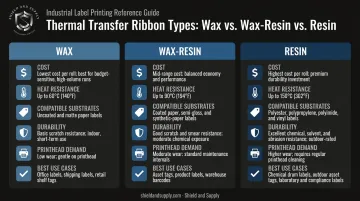
Melt point data sourced from ARMOR-IIMAK wax-resin ribbon product specifications.
What Are Wax Thermal Transfer Ribbons?
Wax ribbons use a wax-dominant ink blend coated onto a PET film carrier. When the printhead applies heat, the wax melts and transfers onto the label substrate. The lower melt point — around 65°C / 149°F — means wax ribbons run at faster print speeds (up to 400 mm/s on products like the ARMOR-IIMAK AWR 8) and demand less energy per label.
A distribution center printing thousands of shipping labels per shift benefits from that speed and lower consumable cost without sacrificing print quality.
Where Wax Performs Well
Wax ribbons produce a dark, crisp image on paper because the wax physically melts into the surface texture of the substrate. This makes them the right choice for:
- Coated and uncoated paper labels
- Matte shipping and pallet labels
- Warehouse bin and shelf labels
- Receiving tags and inventory labels
- Tyvek® tags (both wax and wax-resin are documented as compatible with Tyvek® Brillion)
Where Wax Falls Short
Wax-printed labels are susceptible to scratching, smudging, and chemical exposure. They're designed for labels that get applied, scanned, and replaced relatively quickly — not labels expected to survive months in a harsh environment. If a label will be exposed to cleaning solvents, outdoor moisture, or physical abrasion, wax isn't the right call.
Wax is the most economical option for standard indoor labeling on paper substrates. ARMOR-IIMAK lists shipping labels, rack identification labels, and pallet identification labels as primary use cases — all indoor, paper-based, and relatively short-lifecycle.
What Are Resin Thermal Transfer Ribbons?
Resin ribbons use a resin-dominant ink formulation that bonds chemically to synthetic label substrates rather than just melting onto the surface. This chemical bonding is what gives resin-printed labels their resistance profile. ARMOR-IIMAK's AXR 7+ resin ribbon, for example, supports PE, PET, and polyamide substrates and maintains high-temperature resistance up to 180°C / 356°F — compared to 60°C for wax.
The trade-off is heat demand. Resin ribbons require higher printhead temperatures to transfer properly, which means printer calibration matters more. Running a resin ribbon at incorrect darkness settings or on an incompatible substrate can accelerate printhead wear.
Applications That Require Resin Ribbons
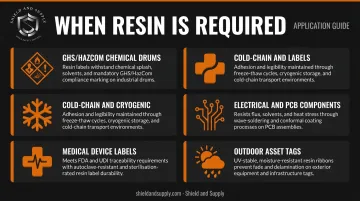
Some environments simply disqualify wax ribbons by nature. Resin is the required choice for:
- GHS/HazCom chemical drum labels — must remain legible under OSHA 29 CFR 1910.1200, which requires labels to be legible and prominently displayed at all times
- Cold-chain and cryogenic labeling — Zebra pairs cryogenic label systems with resin ribbons for liquid nitrogen, dry ice, and deep-freeze conditions
- Medical device labels — FDA UDI requirements expect direct-mark UDI labels to last through the device's expected service life
- Electrical component and PCB labels — exposure to solvents, flux, and cleaning agents demands solvent-resistant prints
- Outdoor asset tags — UV exposure, moisture, and temperature cycling will degrade wax prints within weeks
How Resin Ribbons Affect Printhead Wear
Honeywell's guidance recommends running ribbon approximately 10 mm wider than the combined label and backing paper width to avoid print defects and reduce wear. If you're switching to resin ribbons, test your printer's darkness and speed settings against the specific ribbon and substrate before full production runs.
Wax vs. Resin: Which Ribbon Is Right for Your Operation?
The decision comes down to four variables: substrate material, operating environment, required label lifespan, and total cost of labeling — not just ribbon cost.
The Total Cost Argument
Wax ribbons cost less per roll. But when labels fail, failed barcode scans require manual intervention — GS1 notes that an unreadable barcode may require manual GTIN entry, which disrupts picking and receiving workflows. Add reprinting labor and re-labeling downtime, and the "savings" from cheaper ribbons evaporate. For compliance-critical labels, the exposure from a degraded HazCom label carries additional risk that has no easy dollar figure.
When Wax-Resin Makes Sense
Wax-resin ribbons are the practical middle option many operations skip over. With a melt point of around 75°C and heat resistance to 100°C, they outperform wax without requiring the full cost or printhead demand of resin. ARMOR-IIMAK's APR 6 wax-resin ribbon covers pharmaceutical labeling, food information labels, outdoor product labels, horticulture tags, and cold-condition food labeling — applications where wax would degrade but full resin may be over-specified.
Situational Recommendations
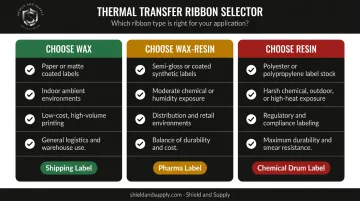
Choose wax if:
- Labels are on paper or Tyvek® stock
- Used indoors in controlled conditions
- Short label lifecycle (shipping, retail, bin labels)
- High-volume output where print speed matters
Choose resin if:
- Labels are on polyester, PE, or other synthetic substrates
- Exposure to chemicals, solvents, outdoor elements, or extreme temperatures
- Compliance-critical applications (GHS, medical, FDA UDI)
- Long label lifespan is required
Choose wax-resin if:
- Mixed substrate environments (some paper, some coated synthetics, BOPP)
- Mid-range durability requirements — pharma, lab, cold-chain
- Require better chemical resistance than wax without the full cost of resin
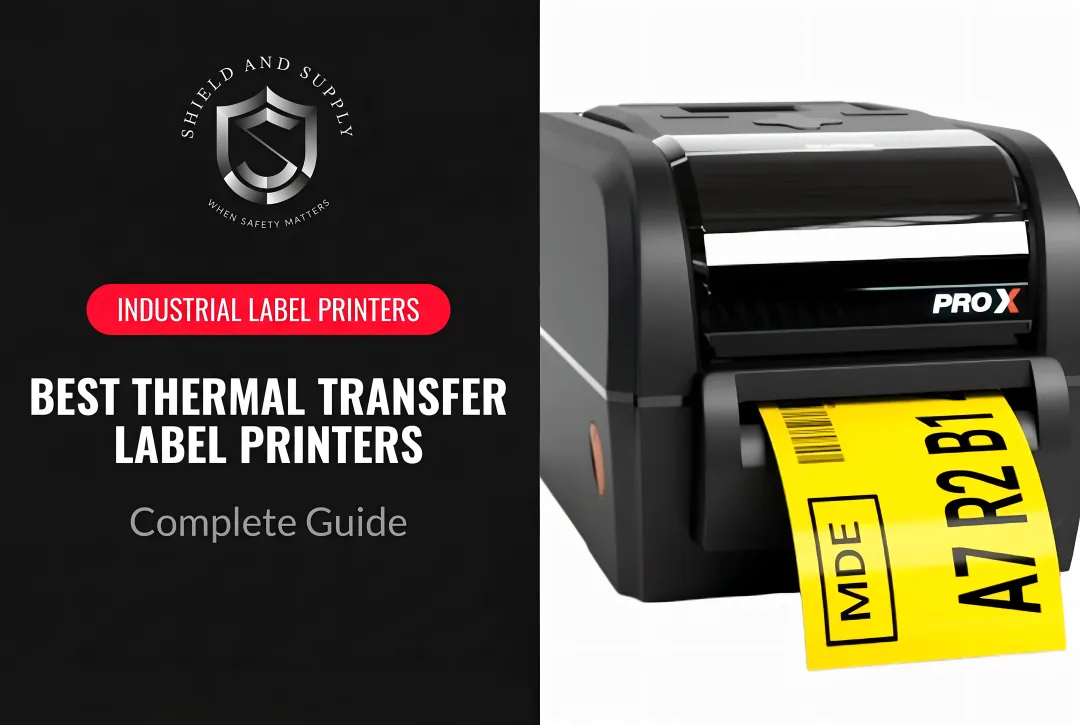
Shield and Supply's LabelTac® printers are designed for these industrial applications, and matching the right ribbon to your label stock matters. Browse print ribbon options at shieldandsupply.com/products/print-ribbon or call 877-514-0727 for application-specific guidance.
Real-World Application: When Ribbon Choice Becomes a Compliance Issue
Consider a common scenario in chemical manufacturing: a facility uses standard wax ribbons on paper labels for their chemical storage drums. The labels print clearly. After several weeks of normal handling — exposure to moisture from hose-downs, contact with chemical splatter, and physical abrasion during drum movement — the labels begin degrading. Printed text fades. GHS pictograms become unreadable.
Under OSHA 1910.1200(f)(9), those labels must remain legible and prominently displayed. An inspection at this point doesn't just result in a citation for the degraded label — it creates potential liability for the entire HazCom program.
The fix isn't complicated: switch to a resin ribbon paired with a synthetic polyester label stock. The resin bonds chemically to the polyester substrate, producing prints that resist the same solvents, moisture, and abrasion that destroyed the wax labels. Ribbon selection looks like a routine purchasing decision. In practice, it's an operational and compliance call. The wrong ribbon in the wrong environment can trigger OSHA citations, disrupt receiving and picking workflows, and compromise safety information on hazardous materials — all from a consumable that costs less than a few dollars per roll.
If your facility is seeing label failures, smeared barcodes, or an upcoming safety audit has you questioning your labeling system, Shield and Supply can identify the right ribbon and label stock for your application. Reach out at shieldandsupply.com or call 877-514-0727.
Conclusion
Ribbon selection comes down to matching the material to the environment. Wax delivers cost-efficient, high-speed performance for paper labels in standard indoor settings. Resin handles synthetic substrates, chemical exposure, temperature extremes, and compliance requirements where legibility must hold long-term. Wax-resin fills the gap between the two.
For manufacturing and warehousing operations, the ribbon decision connects directly to scan accuracy, reprinting costs, and labeling compliance under OSHA and GHS standards. Choosing the wrong ribbon means reprinting labels, risking failed scans, and potentially falling out of compliance — costs that compound quickly at scale.
Frequently Asked Questions
What is the difference between wax and resin thermal transfer ribbons?
Wax ribbons use a wax-dominant ink blend suited for paper labels in standard indoor environments. Resin ribbons use a resin-dominant formulation that bonds chemically to synthetic substrates for harsh-environment durability. The key differences come down to substrate compatibility, durability under stress, and cost.
What is ribbon wax used for?
Wax ribbons are used for everyday labeling applications: shipping labels, retail tags, warehouse shelf and bin labels, and pallet labels. They're the right choice for paper-based labels in indoor environments where chemical exposure, outdoor conditions, and abrasion aren't factors.
How long does a thermal transfer ribbon last?
Wax-printed labels may degrade within weeks under harsh conditions, while resin-printed labels can maintain legibility for years. Resin ribbons are rated for heat resistance up to 180°C, versus 60°C for standard wax.
Can I use a wax ribbon on synthetic labels?
Wax ribbons aren't recommended for fully synthetic substrates like polyester or polypropylene. Wax doesn't bond as effectively to smooth synthetic surfaces, resulting in poor adhesion, smearing, or eventual peeling. Use wax-resin or full resin ribbons for synthetic materials.
Which thermal transfer ribbon is best for outdoor or harsh environments?
Resin ribbons paired with synthetic label stock — polyester in particular — are the best choice for outdoor, chemical, or temperature-extreme environments. They resist UV exposure, moisture, abrasion, and solvents in ways that wax and even wax-resin ribbons cannot match.
Does the type of ribbon affect printhead life?
Yes. Resin ribbons require higher heat settings, and incorrect darkness or speed calibration can accelerate printhead wear. Running ribbon approximately 10 mm wider than the label and validating settings for each ribbon-substrate combination helps protect the printhead.