The stakes are real. US DOT's PHMSA published a proposed rulemaking in February 2026 (Federal Register Document 2026-02575) that would assign formal hazmat classifications to sodium-ion batteries for the first time. Until that rule is finalized, facilities storing these cells must make informed labeling decisions—and getting it wrong can slow emergency response, trigger OSHA liability, and create dangerous confusion between sodium-ion and sodium metal batteries.
This article covers what NFPA 704 requires, how to read the hazard diamond, where different battery chemistries fall on each scale, and what practical compliance looks like for facilities managing battery storage today.
Key Takeaways
- NFPA 704 uses a color-coded diamond to communicate health, flammability, reactivity, and special hazards to emergency responders at a glance.
- Lithium-ion batteries rate approximately 0-1-0 on the NFPA 704 diamond; lithium metal batteries rate roughly 2-3-2 (W) due to higher flammability and water reactivity.
- Sodium-ion batteries behave more like lithium-ion than sodium metal—DOT's proposed 2026 rule assigns them Hazard Class 9, not the more severe Division 4.3 that applies to sodium metal batteries.
- OSHA HazCom requires labels to be legible, prominent, and current—update immediately if battery chemistry changes on-site.
What Is the NFPA 704 Standard?
NFPA 704, published by the National Fire Protection Association, is the US standard for communicating material hazards to emergency responders at fixed facilities. The current edition is NFPA 704-2022, titled Standard System for the Identification of the Hazards of Materials for Emergency Response.
The diamond is a facility-level tool—it marks storage areas, buildings, and process areas so firefighters and first responders can assess hazards before entering. This is distinct from DOT shipping regulations, which use UN numbers and placards for transport.
How NFPA 704 Fits Into the Broader Compliance Picture
Three standards frequently intersect in battery storage environments, and they're easy to confuse:
- NFPA 704 — Hazard communication for emergency responders at fixed locations
- NFPA 30 — Flammable and combustible liquids code; governs storage of flammable materials
- NFPA 70E — Electrical safety work practices, including battery room requirements under Article 320
OSHA's Hazard Communication Standard (29 CFR 1910.1200) requires employers to maintain labels and Safety Data Sheets (SDS) for hazardous chemicals. OSHA also explicitly publishes guidance comparing NFPA 704 diamonds with HazCom 2012 labels.
The two systems serve different audiences: HazCom labels are for workers handling materials daily, while NFPA 704 diamonds are for emergency responders arriving on scene.
NFPA 704 is not optional for facilities storing hazardous materials. Ignoring it creates measurable regulatory exposure under local fire codes and OSHA requirements.
Breaking Down the NFPA 704 Diamond
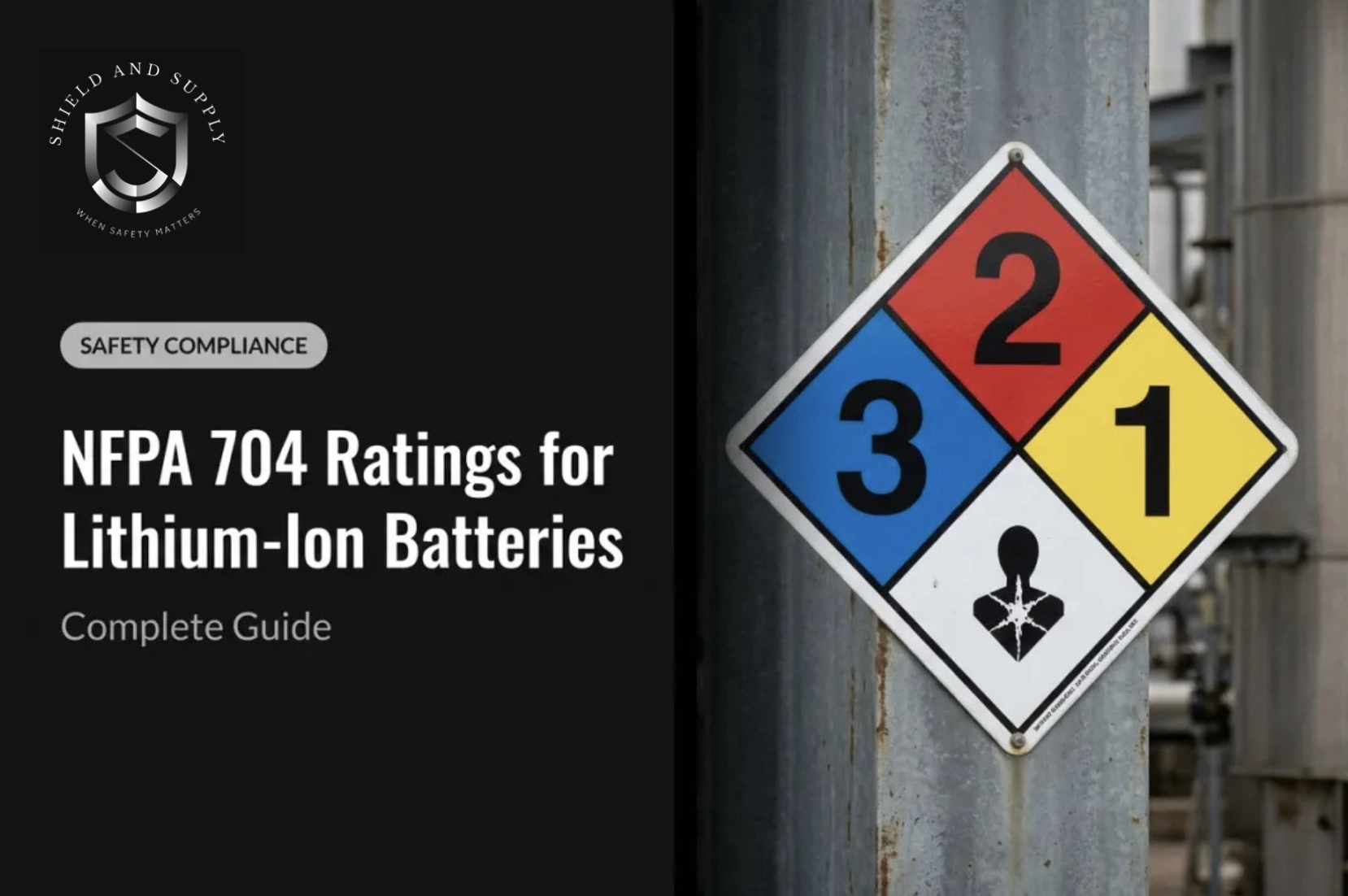
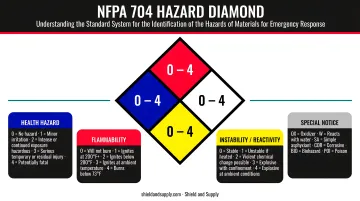
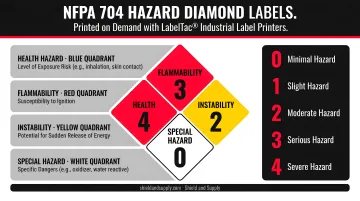
The diamond has four quadrants, each covering a distinct hazard category. Numbers range from 0 (no hazard) to 4 (maximum hazard).
| Quadrant | Color | What It Measures |
|---|---|---|
| Top | Red | Flammability |
| Left | Blue | Health hazard |
| Right | Yellow | Reactivity/instability |
| Bottom | White | Special hazards (OX, W, SA) |
Health (Blue) Scale
| Rating | Meaning |
|---|---|
| 0 | No hazard under normal conditions |
| 1 | Minor irritation on exposure |
| 2 | Intense or prolonged exposure causes temporary injury |
| 3 | Short exposure causes serious injury |
| 4 | Short exposure can cause death |
Battery chemistry matters here. Peer-reviewed research published in Scientific Reports documented hydrogen fluoride and other toxic fluoride gas emissions from lithium-ion battery fires: a result that directly influences health ratings when evaluating thermal runaway scenarios.
Facilities with large battery banks should factor this into ventilation design, not just labeling.
Flammability (Red) Scale
| Rating | Meaning |
|---|---|
| 0 | Will not burn |
| 1 | Must be preheated before ignition |
| 2 | Must be moderately heated to ignite |
| 3 | Can ignite at ambient temperature |
| 4 | Burns readily at normal conditions |
Liquid electrolyte cells (both lithium-ion and sodium-ion) fall in the 1 range under normal conditions: the electrolyte requires preheating before ignition. Solid-state battery designs change this calculation, generally resulting in a lower flammability rating because they eliminate flammable liquid electrolytes entirely.
Reactivity (Yellow) Scale
| Rating | Meaning |
|---|---|
| 0 | Stable under normal conditions |
| 1 | Unstable at elevated temperature |
| 2 | Violent change possible at high temp or with water |
| 3 | Can detonate with a strong initiating source |
| 4 | Can detonate at normal temperature and pressure |
This is where the distinction between sodium-ion (estimated 0–1) and sodium metal (3–4 with violent water reaction) becomes critical. These are not the same chemistry, and using the wrong rating for a sodium metal product is a serious compliance failure with direct emergency response consequences.
Special Hazards (White Section)
Three symbols appear in the white quadrant:
- OX — Oxidizer (can accelerate fire)
- W (strikethrough) — Water-reactive; dangerous reaction with water
- SA — Simple asphyxiant
Sodium metal and lithium metal batteries require the W symbol—water must never be applied to these fires. Sodium-ion batteries, which do not use water-reactive sodium metal, typically do not require the W symbol. When facilities transition to new battery chemistries, applying the wrong W symbol—or omitting a required one—is one of the most common labeling errors that can misdirect first responders.
NFPA 704 Ratings for Battery Chemistries
NFPA 704 ratings aren't assigned by chemistry name—they're derived from the actual hazardous properties of the materials inside each specific cell: the electrolyte, anode, and cathode. Facilities should verify ratings against the product-specific SDS from the battery manufacturer.
General guidance by chemistry type still provides a useful working framework for initial planning and labeling decisions.
Battery Chemistry Comparison
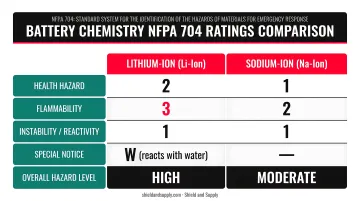
| Chemistry | Approx. NFPA 704 | Special Symbol | DOT Classification |
|---|---|---|---|
| Lithium-ion | ~0-1-0 | None | Class 9 (UN3480/3481) |
| Lithium metal | ~2-3-2 | W (water-reactive) | Class 9 with restrictions |
| Sodium metal | High reactivity | W (water-reactive) | Class 4.3 (UN3292) |
| Sodium-ion | ~0-1-0 (estimated) | Typically none | Class 9 proposed (UN3551/3552) |
Lithium-Ion: The Baseline (~0-1-0)
Lithium-ion batteries under normal conditions represent a relatively modest hazard profile: no significant health hazard (0), electrolyte requiring preheating before ignition (1), and stable under normal conditions with no unusual reactivity (0).
Thermal runaway changes the picture. When cells fail—from physical damage, overcharging, or overheating—they can release flammable gases and toxic HF vapor. The USFA's guidance on lithium-ion battery fire risks confirms this risk, which is why proper ventilation and correct labeling remain critical even at this lower baseline rating.
Lithium Metal: Elevated Risk (~2-3-2 with W)
Lithium metal batteries carry a substantially higher hazard profile. The approximate 2-3-2 rating reflects:
- Health (2): Toxic exposure risk from fire or cell breach
- Flammability (3): Highly flammable; potential to ignite at or near ambient temperature
- Reactivity (2): Violent reaction possible at elevated temperature or mechanical shock
The W symbol is required—water applied to a lithium metal battery fire can accelerate the reaction rather than suppress it. Class D extinguishers are appropriate for lithium metal fires. Any storage area housing lithium metal batteries without the W symbol in the white quadrant creates a direct emergency response hazard: responders defaulting to water can make a bad situation significantly worse.
Sodium-Ion: Where It Currently Sits
Unlike the lithium metal and sodium metal chemistries above, sodium-ion batteries use sodium ions cycling through an electrolyte chemically similar to lithium-ion—not reactive sodium metal. Their estimated NFPA 704 profile (~0-1-0) closely mirrors lithium-ion rather than sodium metal.
No NFPA 704-specific formal guidance for sodium-ion batteries has been published as of writing. Until NFPA issues dedicated guidance, treat the product SDS as the authoritative source—and monitor for updates as sodium-ion deployments scale up in industrial settings.
Sodium-Ion Battery Hazards and the Emerging Regulatory Landscape
Sodium-ion technology is scaling up. According to the IEA, sodium-ion batteries are projected to provide less than 10% of EV batteries by 2030 but represent a growing share of energy storage deployments. On April 21, 2025, CATL announced its Naxtra sodium-ion passenger EV battery, achieving 175 Wh/kg energy density—confirming commercial viability at scale.
That scale-up has direct implications for how facilities classify and store these cells. The key chemistry difference from lithium-ion: sodium-ion cells tolerate low states of charge during transport and storage without the cell damage risks that make deeply discharged lithium-ion problematic. That distinction is why DOT places sodium-ion under Hazard Class 9 rather than the more restrictive Division 4.3 framework.
The 2026 PHMSA Proposed Rule
Federal Register Document 2026-02575, published February 10, 2026, under Docket PHMSA-2023-0111 (HM-215R), proposes:
- UN 3551 — Sodium ion batteries with organic electrolyte, Class 9
- UN 3552 — Sodium ion batteries contained in/packed with equipment with organic electrolyte, Class 9
This harmonizes US rules with international standards and places sodium-ion batteries in the same hazmat class as lithium-ion (UN 3480/3481). The comment period closed April 13, 2026. As of publication, the rule is proposed, not final—facilities should monitor the Federal Register for the final rule publication.
The Sodium Metal Confusion Risk
UN 3292 (Batteries/Cells containing sodium) remains classified as Class 4.3 — Dangerous When Wet under current federal law, governed by 49 CFR 173.189.
Applying a sodium-ion NFPA 704 rating to a sodium metal battery—or the reverse—sends emergency responders to the wrong suppression method. Facilities handling either chemistry should maintain separate storage labels, distinct inventory entries, and clearly differentiated SDS documentation to prevent this mix-up at the point of emergency response.
NFPA 704 Compliance in Practice
Labeling Requirements
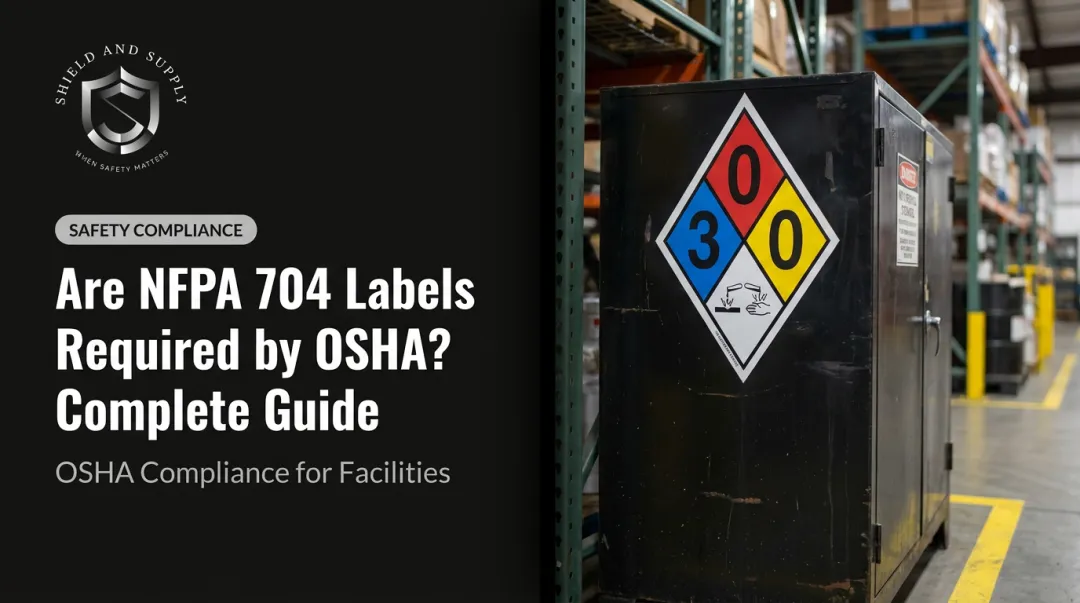
OSHA HazCom (29 CFR 1910.1200) requires that workplace labels be legible, in English, and prominently displayed. For battery storage areas, that means:
- NFPA 704 diamonds posted at facility entrances and storage locations
- Labels that accurately reflect the chemistry currently on-site
- Durable, weather-resistant materials for outdoor or high-humidity industrial environments
- Immediate label updates when battery chemistry changes—not on the next supply order cycle
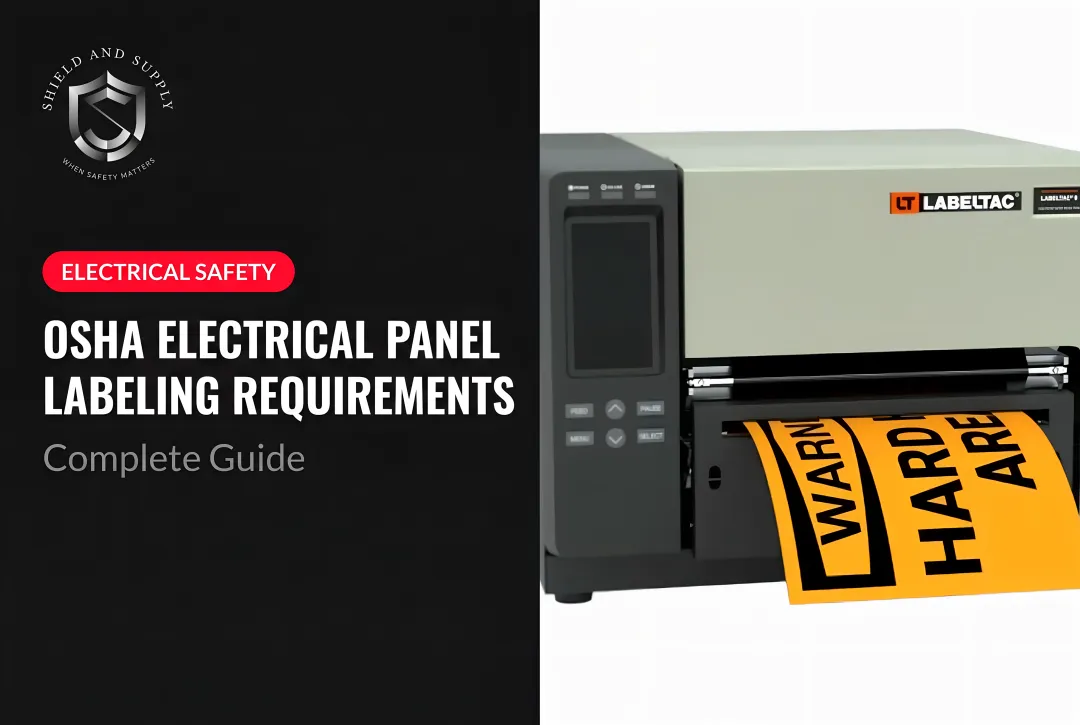
Meeting that last requirement—immediate updates—is where on-demand printing makes a real operational difference. Shield and Supply's LabelTac® industrial label printers paired with LabelSuite™ software let safety teams design and print NFPA 704 hazard diamonds without waiting on outside vendors.
The LabelTac® 9 handles print widths up to 9 inches and outputs up to 2,500 labels per day, making it the practical choice for large-format safety signage. Every printer includes a Full Lifetime Warranty on all parts and labor. LabelSuite™ (a $299.99 value) comes free with every unit. For sizing questions specific to your facility, contact Shield and Supply at 877-514-0727 or info@shieldandsupply.com.
Storage Best Practices
- Store batteries in cool, dry, well-ventilated areas
- Separate batteries by chemistry class—do not co-locate sodium metal and sodium-ion without unambiguous labeling differentiation
- Keep batteries free from mechanical damage, crushing, or puncture risk
- Ensure staff can recognize NFPA 704 symbols and know what action each quadrant rating requires
- Maintain current SDS documents at each storage location
Emergency Response Guidance
| Battery Type | Fire Suppression | Water Use |
|---|---|---|
| Lithium-ion | Class ABC extinguisher | Large volumes can cool cells, but not first choice |
| Sodium-ion | Class ABC extinguisher | Same approach as Li-ion |
| Lithium metal | Class D extinguisher | Never use water |
| Sodium metal | Class D extinguisher | Never use water |
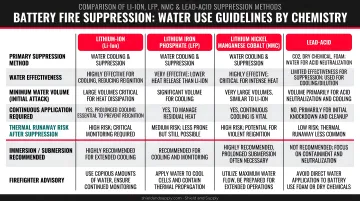
First responders arriving on-site should be able to identify battery chemistry immediately from posted NFPA 704 diamonds. That only works if the diamonds are accurate, current, and legible from an appropriate distance.
How Shield and Supply Can Help
As sodium-ion battery adoption grows and DOT's proposed 2026 rule moves toward finalization, facilities need the ability to update NFPA 704 placards quickly—not wait days for pre-printed orders to arrive from an outside vendor.
Shield and Supply's LabelTac® printer systems give safety teams that capability in-house. Both the LabelTac® Pro X ($1,299.99) and LabelTac® 9 ($3,999.00) come ready to print with:
- LabelSuite™ Design and Print Software included at no extra cost
- Industrial-grade weatherproof vinyl supply rolls rated for 5–10 years indoors or outdoors
- Full Lifetime Warranty on the printer
When battery inventory changes, compliance labeling changes with it—the same day.
For facilities building or updating a battery hazard labeling program, contact the Shield and Supply team at 877-514-0727 or info@shieldandsupply.com.
Frequently Asked Questions
What do the colors and numbers in the NFPA 704 diamond mean?
The blue (left) quadrant covers health hazards 0–4, red (top) covers flammability 0–4, yellow (right) covers reactivity 0–4, and white (bottom) indicates special hazards using symbols like OX (oxidizer), W (water-reactive), or SA (simple asphyxiant). Higher numbers mean greater danger—emergency responders use these ratings to determine appropriate PPE and suppression methods before entering.
Are sodium-ion batteries classified as hazmat under NFPA 704?
Sodium-ion batteries don't yet have a dedicated NFPA 704 classification, but their chemistry profile is similar to lithium-ion and would carry an approximate 0-1-0 rating based on the product SDS. Under DOT's proposed 2026 rule, they fall under Hazard Class 9, which is distinct from sodium metal batteries and their more severe Division 4.3 classification.
How safe are sodium-ion batteries compared to lithium-ion?
Sodium-ion batteries are generally considered comparable to or slightly safer than lithium-ion in thermal stability. They do not contain water-reactive sodium metal and are not classified as Division 4.3. Their chemistry allows for lower-risk storage at reduced states of charge, which is a practical logistics advantage in industrial environments.
Do sodium-ion batteries require a battery management system (BMS)?
Commercial and industrial sodium-ion battery packs require a BMS for cell balancing, temperature monitoring, and overcharge/overdischarge protection, mirroring lithium-ion battery management requirements. A functioning BMS reduces the risk of thermal events relevant to NFPA 704 hazard conditions.
What does NFPA 70E Article 320 require for battery rooms?
NFPA 70E Article 320 covers safety-related work practices for stationary battery systems, including PPE requirements and risk assessments for chemical, electric shock, and arc flash hazards. It applies to systems with nominal voltage exceeding 50V. Article 320 governs how workers interact with battery systems; NFPA 704 tells emergency responders what they're dealing with from outside.
Are sodium-ion batteries commercially available now?
Yes. CATL announced its Naxtra sodium-ion passenger EV battery on April 21, 2025, achieving 175 Wh/kg energy density—a commercially ready product targeting passenger vehicle and energy storage applications. Sodium-ion cells are actively being deployed in EVs, grid storage, and consumer electronics, with production scaling across multiple manufacturers.