Introduction
A drum label that peels, a pipe marker that fades, or a hazard symbol that smears under solvent contact isn't just an inconvenience — it's an OSHA violation waiting to happen. In chemical manufacturing, pharmaceuticals, oil and gas, and warehousing, label durability is a compliance requirement.
OSHA's Hazard Communication Standard ranked as the No. 2 most cited violation in FY2025, with 2,546 citations logged by the National Safety Council. Willful or repeated violations carry penalties up to $165,514. Many of those citations trace back not to missing labels, but to labels that degraded before anyone noticed.
Choosing a chemical resistant label printer means matching print technology, media, ribbon chemistry, and software to your specific hazard environment. This guide walks through each of those variables — so you can select a system that holds up where it matters.
Key Takeaways
- Chemical resistant label printing is a system decision: printer + ribbon + synthetic media + adhesive must work together
- Thermal transfer with resin ribbon on polyester, vinyl, or polypropylene is the safest default for harsh chemical environments
- GHS/OSHA HCS compliance requires all six label elements to remain legible for the full product lifecycle, not just at the time of printing
- Facilities that print labels on-demand respond faster to regulatory changes and reduce per-label costs vs. outsourcing
- Shield and Supply's LabelTac® Printers with Full Lifetime Warranty and LabelSuite™ software are purpose-built for industrial compliance labeling
What Are Chemical Resistant Label Printers?
Chemical resistant label printers are industrial-grade systems engineered to produce labels that maintain adhesion, legibility, and structural integrity when exposed to solvents, acids, bases, oils, moisture, and temperature extremes. Standard office printers using paper stock don't qualify — their inks sit on the label surface and degrade quickly under real-world chemical contact.
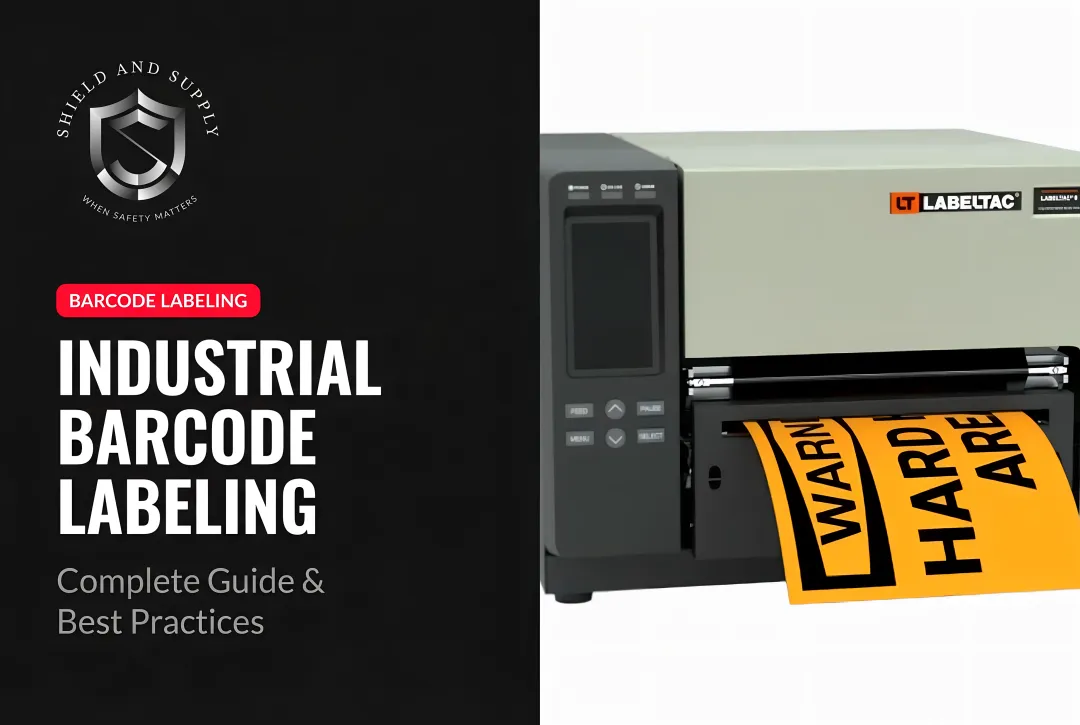
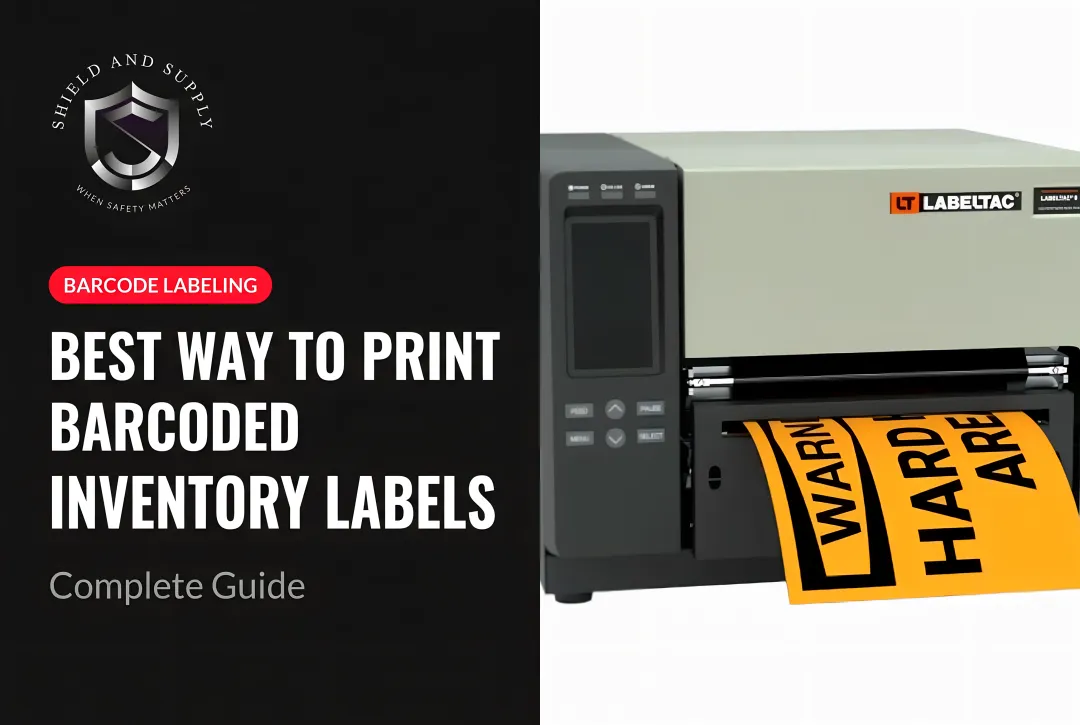
The dominant technology is thermal transfer: a heated printhead bonds resin-based ink from a ribbon onto synthetic media. The result is printed output fused into the label surface, not layered on top — which is what creates genuine chemical and abrasion resistance.
Form Factors to Know
| Form Factor | Best For | Key Consideration |
|---|---|---|
| Industrial thermal transfer | High-volume plant, drum, and compliance labeling | Media width, ribbon capacity, duty cycle, network integration |
| Desktop/benchtop | Lab, maintenance, batch labeling | Must accept synthetic media and resin ribbon |
| Portable/mobile | Field service, cold storage, receiving docks | Battery life, IP rating, drop resistance |
Core Components That Drive Durability
Three components determine whether a printer can handle chemical environments — and all three must work together as a validated system.
Printhead mechanism: Thermal transfer printheads bond ink from a resin ribbon directly into the synthetic label surface. Inkjet and laser methods leave ink or toner on the surface, where it remains vulnerable to chemical attack.
Label media: The printer must accept industrial synthetic substrates — polyester, vinyl, polypropylene, and aluminum-faced materials. Printers limited to paper stock are unsuitable for chemical environments.
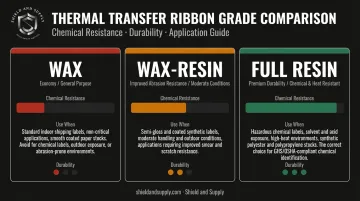
Ribbon grade — and this one gets missed most often. Ribbon choice follows a clear hierarchy:
- Wax: Economy, general purpose — avoid for chemical-exposure labels
- Wax-resin: Improved abrasion resistance for moderate conditions
- Full resin: Premium durability for solvents, acids, heat, and synthetics — the correct choice for hazardous chemical labels
Approve printer, ribbon, label stock, and adhesive as a tested system. A resin ribbon validated for one synthetic substrate may not perform identically on another.
Understanding the components sets the baseline. The industries below show where that durability is non-negotiable.
Industries That Depend on These Printers
- Chemical manufacturers and distributors — OSHA HCS requires shipped-container labels with all six mandatory elements
- Pharmaceutical and lab environments — Solvents, reagents, and cryogenic storage create combined chemical and temperature exposure
- Warehousing and logistics — Containers may be handled, stacked, and shipped internationally, including by sea
- Oil and gas, agriculture, food and beverage — Mixed exposure to fuels, lubricants, pesticides, and process cleaning chemicals
Each of these environments demands that labels hold up from first application through final disposal — which shapes every buying decision covered in this guide.
What to Consider When Choosing a Chemical Resistant Label Printer
Selecting the right printer means matching technical specifications to your facility's actual chemical exposure, regulatory requirements, and production volume. The six factors below connect printer specs to measurable outcomes: compliance accuracy, label longevity, operational uptime, and total cost of ownership.
Print Technology
Thermal transfer is the default for industrial chemical labels because resin ribbon on synthetic media produces output that resists solvents, moisture, and abrasion without requiring lamination. Standard laser and dye-based inkjet printers fail under real-world exposure — their output isn't bonded into the substrate.
Pigment-based inkjet is a good alternative for full-color GHS drum labels when the exact printer, ink, and media combination carries documented compliance evidence. Brady's comparison confirms thermal transfer labels resist abrasion, fading, moisture, solvents, harsh chemicals, and extreme temperatures as a category. For BS 5609 marine shipping compliance, the key point is that certification applies to the printed label system — meaning a specific printer, ribbon or ink, and facestock combination tested together, not the technology in isolation.
Label Material Compatibility
Match material to exposure profile — solvent, acid/base, oil, UV, moisture, heat, or abrasion — not to printer compatibility alone. Key options:
| Material | Strengths | Limitations |
|---|---|---|
| Polyester | UV, tear, and solvent resistance; strong default for asset and compliance labels | Verify adhesive for specific surface types |
| Vinyl | -40°F to 180°F service range; up to 10 years outdoor durability; performs against sulfuric acid, ammonia, diesel | Fails with MEK, acetone, toluene, gasoline |
| Polypropylene | Excellent solvent resistance; good for lab and general ID labels | Not recommended for long-term outdoor use without validation |
| Aluminum-faced | High-heat and corrosive environments; durable nameplates | Verify ribbon and adhesive compatibility |
Adhesive selection matters as much as facestock choice. High-performance adhesives rated for low surface energy plastics, textured metals, or wet surfaces must be compatible with the printer's media handling — edge lifting in the field often traces back to adhesive mismatch, not media failure.
Print Resolution and Compliance Quality
OSHA HCS 1910.1200 requires label elements to be clearly legible throughout a product's use lifecycle. While OSHA doesn't mandate a specific DPI number, GHS pictograms have a 10mm x 10mm minimum size guidance from UNECE — and at that size, lower-resolution output risks blurred borders and illegible symbols.
Practical guidance:
- Higher resolution (600+ DPI) matters most for pictograms, fine text, barcodes, and QR codes that must remain scannable after industrial exposure
- Validate print quality internally at your actual label size — don't assume a DPI rating automatically equals compliance
- Barcodes and QR codes are useful for SDS lookup and traceability but are not among the six mandatory OSHA HCS label elements
OSHA and GHS Compliance Requirements
OSHA HCS 1910.1200 requires six elements on every shipped-container label:
- Product identifier
- Signal word ("Danger" for severe hazards, "Warning" for less severe — if both apply, use only "Danger")
- Hazard statement(s)
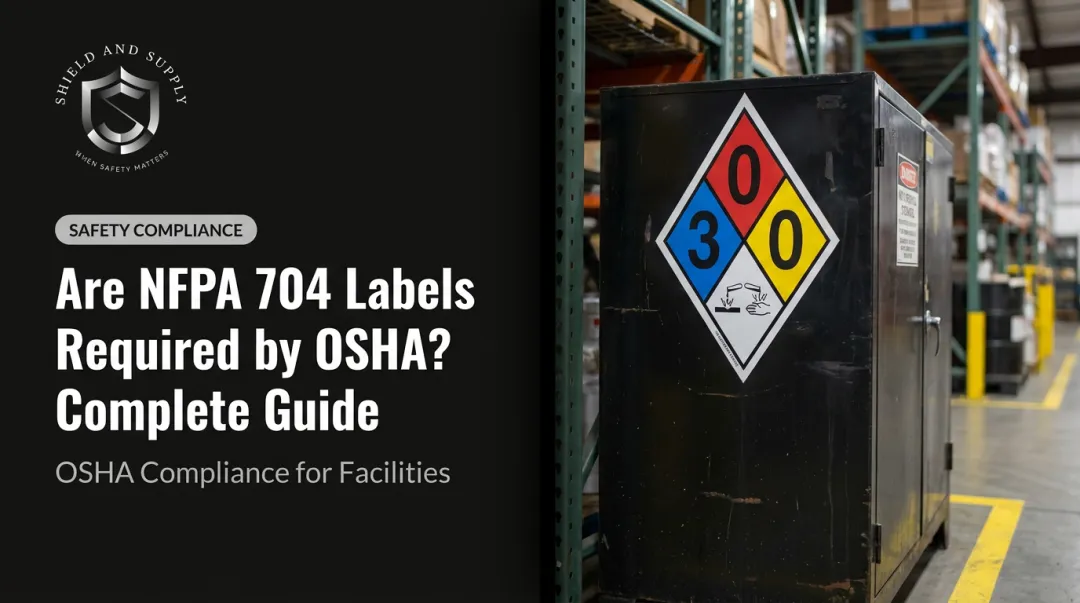
- Pictogram(s) with red diamond border
- Precautionary statement(s)
- Name, address, and telephone number of the responsible party
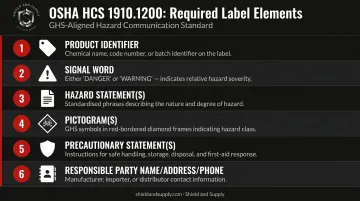
OSHA doesn't certify or reject printer types — the standard focuses on content legibility and label durability throughout use. The printer-plus-media system must keep all six elements readable in your specific exposure environment.
For facilities shipping chemicals internationally via ocean freight, BS 5609 certification applies. This marine durability standard covers 3-month seawater immersion plus print durability testing. Section 2 certifies the base label material and adhesive; Section 3 certifies the printed image using a specific printer, ribbon or ink combination. Verify both sections apply to your exact supplies, not just the facestock material in isolation.
Environmental Durability Ratings
Printers deployed in splash zones, high-humidity areas, or outdoor receiving docks need an IP (Ingress Protection) rating under IEC 60529 — the first digit covers dust, the second covers liquid ingress. For reference:
- IP54 — protected against dust and splashing water from any direction (suitable for mobile use in splash-adjacent environments)
- IP65 — dust-tight and protected against low-pressure water jets (suitable for washdown-adjacent areas)
Operating temperature range matters equally. Labels in cold storage must remain legible through freeze-thaw cycles; labels near processing equipment must survive sustained heat. Specify both the printer's environmental rating and the label media's service temperature range together — a label rated for -40°F to 150°F still fails if the printer itself can't operate in that environment.
Software Integration and Ease of Use
Once your hardware and media are matched to the environment, software determines how quickly your facility responds to regulatory changes — and how consistently compliant labels are produced across shifts and operators. Industrial labeling software built around GHS workflows reduces operator error and prevents non-compliant output, especially when pictograms, signal words, and hazard statements must all appear on every label.
Key software capabilities to evaluate:
- Pre-built GHS/HCS label templates with all six mandatory elements
- GHS pictogram libraries and signal word formatting
- Connectivity to ERP, inventory, or safety management systems (SAP, Oracle, etc.)
- Role-based approval workflows to prevent unauthorized label changes
Connectivity determines how the printer fits into current workflows. USB and Ethernet cover most fixed production environments. Wi-Fi and Bluetooth matter for mobile or multi-station deployments.
Shield and Supply's LabelSuite™ software is designed specifically for GHS and OSHA-compliant label creation, included free with LabelTac® Printers (a $299.99 value). The software is built to be accessible without specialized design skills — reducing training time and the risk of human error on compliance-critical labels.
How Shield and Supply Can Help
Shield and Supply builds industrial labeling systems specifically for facilities where labels need to survive chemical exposure, harsh washdowns, and years of heavy use — while keeping OSHA and GHS compliance straightforward.
The LabelTac® product line includes two primary models:
- LabelTac® Pro X ($1,299.99) — Compact desktop printer for supplies from 1/2" to 4" wide, rugged industrial chassis, built-in Ethernet and USB, color LCD screen, effortless tool-free supply loading. Includes LabelSuite™ software and starter ribbon.
- LabelTac® 9 ($3,999.00) — Large-format printer for supplies from 4" to 9" wide, handles up to 2,500 labels/day, durable metal chassis, color LCD touchscreen, standalone operation capability. Ideal for GHS drum labels and large signage visible from distance.
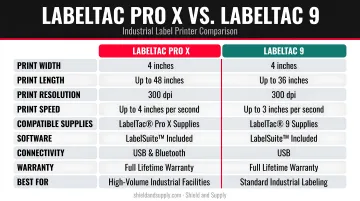
Both models use LabelTac® Print Ribbons formulated for scratch and chemical resistance, with industrial-grade vinyl supply rolls rated for 5–10 years indoors or outdoors. Specialty supplies include high-temperature, reflective, magnetic, and metallic options.
Every purchase is backed by:
- Full Lifetime Warranty on LabelTac® Printers — all parts, labor, and related costs, transferable to subsequent owners
- Free LabelSuite™ software built for GHS and OSHA label creation
- Same-day order processing with nationwide shipping
- 30-day money-back guarantee on all products
- Direct expert support at 877-514-0727 or info@shieldandsupply.com, plus live chat
Conclusion
Choosing a chemical resistant label printer is a compliance and safety decision first, a procurement decision second. The right combination of printer, media, ribbon, and software keeps labels legible, workers informed, and facilities audit-ready in even the harshest industrial conditions.
Don't over-specify or under-specify. A printer built for a dry warehouse won't survive a chemical production floor. A high-volume industrial unit is wasted investment for a small lab printing 20 labels a week. Align specs to your actual exposure environment, regulatory obligations, and production volume.
As chemical inventories change, regulations update, or facilities expand, revisit your printer capabilities, media specifications, and software configuration to stay aligned with current requirements. Schedule an annual review — or trigger one whenever your chemical inventory or site layout changes significantly.
Frequently Asked Questions
Frequently Asked Questions
What is the most severe hazard signal word?
"Danger" is the most severe signal word under GHS and OSHA HCS 1910.1200, used for chemicals posing immediate life-threatening hazards. "Warning" indicates less severe but still significant risks. When both would otherwise apply, OSHA specifies using only "Danger" — and both words must appear clearly on compliant, durable label stock.
What are examples of warning labels?
Common industrial warning labels include flammable liquid labels, corrosive material labels, toxic substance labels, and oxidizer labels. Under GHS, each uses standardized pictograms (red diamond border), signal words, and hazard statements printed on chemical-resistant synthetic media to stay legible in the field.
What print technology is best for chemical resistant labels?
Thermal transfer printing using resin ribbons on synthetic substrates — polyester, vinyl, or polypropylene — is the most reliable choice. The resin ink bonds into the label surface and resists solvents, moisture, and abrasion far better than inkjet or standard laser alternatives. Approve the ribbon, facestock, and adhesive as a validated system for your specific exposure environment.
Can I use a standard office printer to print chemical resistant labels?
No. Standard laser and dye-based inkjet printers are not suitable for chemical environments. Their inks and toners sit on the label surface and degrade under chemical exposure, moisture, and UV — making them non-compliant with OSHA HCS durability requirements and creating real safety risk when labels become unreadable in the field.
What label materials are most resistant to chemicals and solvents?
Material selection depends on your specific chemicals — no single option covers every environment:
- Polyester: Best overall UV, tear, and solvent resistance
- Vinyl: Wide temperature range; avoid MEK and acetone exposure
- Polypropylene: Strong solvent resistance for lab and general ID use
- Aluminum-faced stock: Rated for extreme heat and corrosive conditions
Do chemical resistant label printers need to comply with GHS standards?
The printer itself doesn't carry GHS certification — the complete printer, ribbon, and facestock system must meet OSHA HCS 1910.1200 legibility and durability requirements. Facilities shipping chemicals internationally via ocean freight also need BS 5609 Section 2 and Section 3 certification for the full label system.